Grand Slam History: How Tennis' Four Majors Were Born
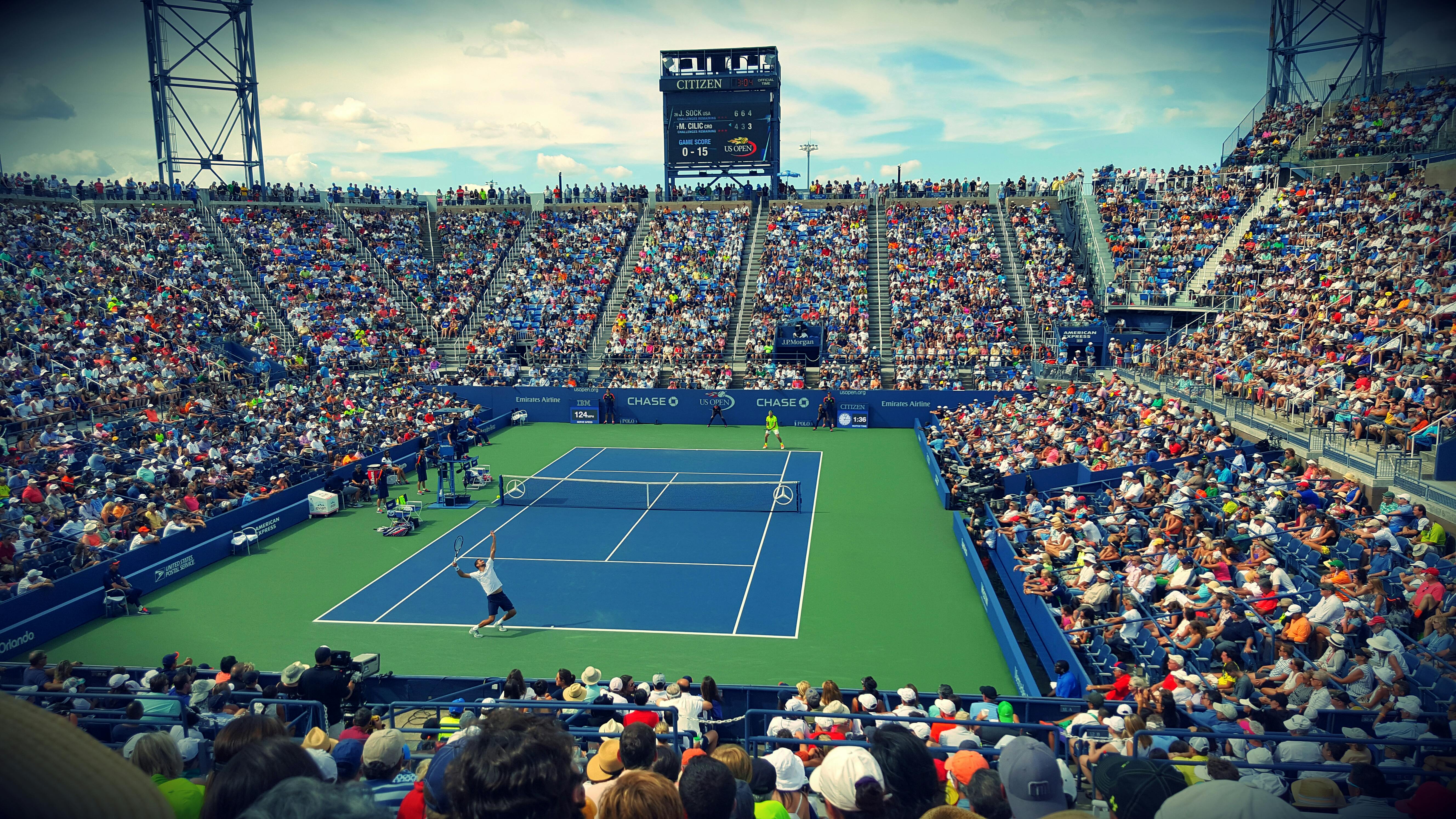
Twenty-two men showed up to a lawn tennis competition in London in the summer of 1877 with no particular sense of occasion. They paid one guinea to enter, watched rain delay the final by about 10 days, and then went home. One of them, Spencer Gore, won the whole thing and reportedly concluded that tennis would never amount to much as a popular sport. He didn't defend his title the following year.
The history of Grand Slam tournaments begins right there, with those 22 men accidentally launching the most prestigious event in all of tennis. Every major we watch today started from something equally modest, specific, and wonderfully human. Understanding where these tournaments came from changes the way you watch them, the surfaces, the stadiums, the ceremonies all carry meaning once you know the backstory. That's part of why we cover Grand Slam history here at TennisCore Blog alongside tips for players learning the game today.
Here's how the four majors were actually born, in the order they arrived.
Wimbledon (1877): A Croquet Club's Unlikely Pivot in Grand Slam History
The All England Croquet Club was founded in 1868, and by the mid-1870s, croquet was losing its audience. The club took a chance on a newly invented game called lawn tennis in 1876, partly to stay relevant. A year later, they organized a championship, not for glory, but to raise funds for the club, and about 200 spectators turned up to watch.
Spencer Gore won the inaugural title, defeating William Marshall in a 48-minute final. Women's singles arrived in 1884. The tournament outgrew its original Worple Road site and moved to the current grounds, with Centre Court opening in 1922 and reaching a capacity of 15,000.
The club's name went through its own identity crisis along the way: "Croquet" was dropped in 1882, quietly restored in 1899, and Wimbledon has remained a grass-court tournament throughout its history, a point of pride that has survived every other modernization imaginable. A retractable roof came to Centre Court in 2009, which feels like a long way from those earliest championships.
The Gore detail is worth sitting with. The first Wimbledon champion thought the sport was a passing fad, never came back to defend his title, and walked away from competitive tennis altogether. There's something genuinely charming about the fact that the oldest major in the history of Grand Slam tournaments began with its own winner having zero faith in the enterprise.
The US Open's Long Road from Newport to New York (1881)
Four years after Wimbledon's debut, the United States National Lawn Tennis Association established the US National Championship in August 1881 at the Newport Casino in Rhode Island. Men and women initially competed at separate venues; women played at the Philadelphia Cricket Club until the tournaments merged. The move to Forest Hills, New York, came in 1915, and in 1978, the tournament found its current home at Flushing Meadows.
The US Open holds a distinction no other major can claim: it has been played at nine different locations across its history. That restlessness reflects the sport's shifting center of gravity as American tennis grew in audience and ambition. The surface changed just as dramatically. Grass was the original playing field, clay had a brief run from 1975 to 1977, and then hard courts arrived at Flushing Meadows from 1978 onward. Jimmy Connors won the title on all three surfaces, which remains one of the more underappreciated feats in the sport's records.
Two pioneering decisions also belong to the US Open. It was the first Grand Slam to introduce tiebreaks, in 1970. And in 1973, under Billie Jean King's sustained advocacy, it became the first major to offer equal prize money to men and women. These weren't small adjustments. They shaped what professional tennis looks like today.
Roland Garros and the Clay Court Story (1891)
The French Championships began in 1891 as a closed interclub competition on clay, open only to members of French tennis clubs. It stayed that way for over three decades. International players were finally allowed in 1925, and three years later, the French Tennis Federation built a new stadium to defend the Davis Cup. They named it after Roland Garros, a French aviator and World War I pilot who had been a member of Stade Français, the club that championed the venue's construction. Garros himself was not a tennis player; his legacy was in aviation. The naming was a tribute proposed by Emile Lesueur, president of Stade Français and a former classmate.
The clay surface is the one thing that has never changed across 130-plus years of the tournament's history. Clay rewards patience and baseline consistency, which is why Roland Garros has always felt distinctly different in character from the other three majors. The 2020 edition brought a retractable roof to the Philippe Chatrier Court, and additions including Court Simonne-Mathieu and floodlights for night matches have pulled the tournament firmly into the modern broadcast era. A competition that once ended at sunset now runs under lights. Roland Garros grew up without losing its clay.
The Australian Open's Nomadic Early Years (1905)
The Australasian Championships launched in 1905 in Melbourne on grass, restricted to players from Australia and New Zealand. Unlike the other three majors, which settled into relatively stable homes within a few decades, this one spent nearly 70 years wandering. It rotated between Melbourne, Sydney, Brisbane, Adelaide, Perth, and even Christchurch before permanently planting itself in Melbourne in 1972, first at Kooyong, then moving to Flinders Park (now Melbourne Park) in 1988.
That 1988 move was the real turning point. The switch to hard courts coincided with the new venue, and attendance increased substantially in the years that followed. The three main courts, Rod Laver Arena, Margaret Court Arena, and John Cain Arena, all feature retractable roofs, which feels fitting for a tournament that spent most of its existence without a fixed address. The Australian Open gained significantly in popularity after 1988, transforming from the least-attended major into the loud, high-energy summer festival that opens every tennis season in January.
1968 and the Open Era: A Turning Point in Grand Slam History
Before 1968, Grand Slams were exclusively for amateur players. Professionals, regardless of talent, were locked out. The International Lawn Tennis Federation voted to change this in March 1968, opening 12 tournaments to both professionals and amateurs. The French Open became the first open Grand Slam that May, and Ken Rosewall, who had spent years on exhibition circuits for income while amateurs competed at Wimbledon, won it. The sport's best players could finally compete in its biggest events.
The Open Era didn't just change who could enter. It created prize money, television deals, and the structure of the modern professional game. The milestones that followed reflect genuine head-to-head competition in a way the amateur era never could. Don Budge completed the first calendar-year Grand Slam in 1938. Rod Laver achieved it twice: in 1962 as an amateur and again in 1969 as a professional. Andre Agassi completed the Career Grand Slam across three different surfaces in 1999. And in 2022, Diede de Groot became the first player in history, able-bodied or wheelchair, to defend a calendar-year Grand Slam sweep, having won all four wheelchair singles titles in both 2021 and 2022. These names and dates are the anchors that give the evolution of the Grand Slams its shape.
The Four Majors and What They Mean Now
A croquet club fundraiser. A national pride exercise. A city searching for a home. A closed competition that eventually opened its doors to the world. These are the actual origins of the four tournaments that define professional tennis today. The Open Era in 1968 stitched them into the unified, globally watched cycle we recognize now: the Australian Open in January, Roland Garros in late May, Wimbledon in late June, the US Open in late August.
The history of Grand Slam tournaments isn't just backstory, it's the lens that sharpens everything you watch. A rain delay at Wimbledon echoes the very first final. A night match at Roland Garros would have been unthinkable for most of the tournament's existence. The Australian Open's enormous crowds represent a complete reinvention that happened within living memory. None of this is background noise. It's the whole story. At TennisCore Blog, it's the story we keep coming back to, because understanding where these tournaments started makes every match mean a little more.