Why Is Tennis Scored 15, 30, 40? The History Explained
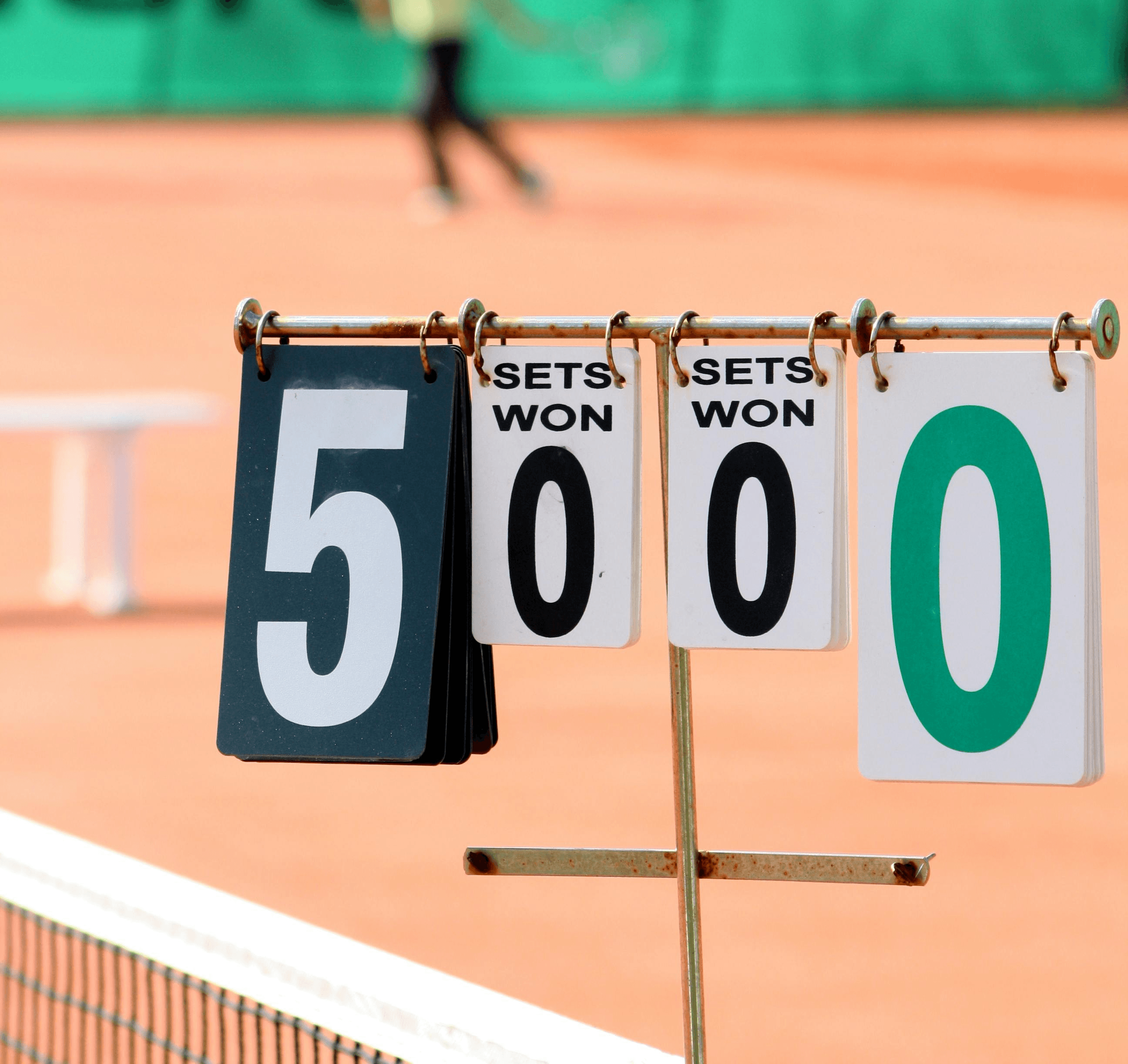
Why is tennis scored 15, 30, 40? If you've ever sat down to watch a match and thought, "wait, why does the score skip 45 entirely and then call zero 'love'?", you're in good company. It's one of the most common questions we hear from beginners here at TennisCore Blog. Zero is "love," a tied score at 40 turns into something called "deuce," and the whole system sounds like it was invented on a dare. It wasn't, but the real story is almost as strange.
The answer involves medieval French handball courts, a clock-face theory that historians have largely set aside, and a shortcut that 16th-century students started using and nobody ever bothered to undo. This is genuinely one of sport's more entertaining origin stories.
Where tennis scoring actually came from: medieval French roots
The 15-30-40 system didn't originate on a grass lawn in England. It traces back to jeu de paume, a French handball game played from the 12th century onward, where players used their palms to volley a ball across a rope or net strung across an indoor court. This is the true ancestor of modern tennis, and the scoring came with it.
What makes this history credible is the paper trail. Written records of 15-30-45 scoring appear as early as 1415 to 1435. Charles d'Orléans references the same progression around 1435 in his poetry. By the 1520s, Erasmus wrote a dialogue, cited by tennis historian Heiner Gillmeister in Tennis: A Cultural History, where players call out "we've got 30, we've got 45" mid-game. These aren't myths or reconstructions. They're primary sources that place the scoring system firmly in medieval France, well before tennis reached English lawns.
Why the medieval scoring used multiples of 15
One theory suggests players in jeu de paume physically advanced 15 feet per point from a 60-foot baseline, so the score reflected their position on the court. It's an appealing idea grounded in the actual geometry of those courts. No primary source directly confirms this connection, so it stays in the "plausible but unproven" column alongside every other specific origin theory. What historians broadly agree on is the French medieval origin. The "why 15" question remains genuinely open.
The clock-face theory: a great story with a timing problem
Here's the explanation you've probably heard: a clock hand moves to 15, 30, 45, then 60 for game. It's tidy, visual, and accounts for nearly every quirk in the system. It even has a built-in explanation for why 45 became 40, to leave room for deuce and advantage within the hour. That neatness is exactly why it spread. It's the kind of story that feels designed to be true.
The problem is the timeline. The 15-30-45 progression appears in written records from 1415 to 1435. Pendulum clocks with minute hands didn't appear until around 1690, more than 250 years later. Gillmeister points to this gap as decisive. There are no images, no court records, and no diagrams linking clock faces to tennis scoring from that era. The theory almost certainly developed as a satisfying retrospective explanation, not a factual account of how the system was invented.
Why "45" quietly became "40", and what "love" and "deuce" actually mean
This is where history gets genuinely charming. A 16th-century French treatise records students shortening "45" to "40" during play, with their teacher correcting them back to "45." The shortcut survived anyway. By the time the All England Club printed its provisional lawn tennis rules in 1877, the rules that governed the first Wimbledon Championships, the score was already written as 40. No formal rulebook ever changed it; players collectively settled on "forty" because it was faster to say than "forty-five," and that was that. One of sport's most low-key historical accidents.
"Love," "deuce," and tennis's most debated vocabulary
Two theories explain "love" as zero. The first traces it to the French l'œuf (egg), because an egg's shape resembles a zero on a scoreboard. The second links it to the English phrase "playing for the love of the game", no stakes, no score, nothing on the line. For a concise explainer on the modern usage and likely origins, see this article on what "love" means in tennis, which surveys both theories and historical context.
"Deuce" is cleaner. It comes from the French à deux le jeu, meaning "to both the game," reflecting a tied score where either player needs two more points to win. French Open umpires still use égalité instead of "deuce", a small but lovely nod to the game's French roots. For a clear modern explanation of how deuce works in match play, see this guide to deuce in tennis. Both terms carry genuine etymological uncertainty, which honestly makes them more interesting, not less.
How to read a tennis scoreboard in two minutes
A tennis match breaks down into three layers: sets, games, and points. Points follow the 15-30-40-game sequence. The first player to win six games takes a set (usually). Win two or three sets, depending on the tournament format, and you win the match. A scoreboard reading "6-4, 3-2" means the first player won the opening set 6 games to 4 and leads the second 3 games to 2.
What deuce and advantage look like in real time
When both players reach 40, the score becomes deuce. Win the next point and you earn "advantage." Win the point after that and the game is yours. Lose it and the score resets to deuce, potentially indefinitely. That mechanic connects directly back to à deux le jeu: a tied score where two more points separate you from winning the game. The history and the modern rules are essentially the same sentence, just 600 years apart. For anyone ready to go deeper, TennisCore's beginner rules guides cover the full structure of a match in the same plain-English style.
The scoring system is old, not broken
The 15-30-40 sequence traces to medieval French jeu de paume , with documentation going back to at least the early 15th century. The clock-face theory is popular and visually satisfying, but it postdates the scoring system by more than two centuries. "45" became "40" through informal spoken shorthand that nobody ever officially reversed. And "love" and "deuce" carry genuinely uncertain but richly French-influenced origins that linguists and tennis historians still debate.
Once you understand where the scoring came from, something shifts in how you watch a match. Every time the umpire says "fifteen-love" or "deuce," you're hearing a thread that runs back through Erasmus, through Charles d'Orléans, through handball courts in medieval France. That's not a bad thing to carry with you the next time you're watching a tiebreak. The scoring system persists because the people who built it counted this way, and every generation since has seen no good reason to change it, quirks and all.